The 14-Day Protocol Helping 5,355+ Women Fade Hormonal Dark Spots
SkinScience switches off the “make more DARK pigment” signal behind melasma — 3% tranexamic acid, not bleach. Built by an independent skin-science researcher who asked why every fade cream fails.
5 Reasons Women Are Switching
From Hydroquinone & Fade Creams To SkinScience
Why 5,355+ women quit the bleach creams, the $80 vitamin C serums, and the morning concealer for good.
It Switches Off The Darkening Signal At The Source — Not Just The Stain It Leaves Behind
Those patches aren’t sun damage. Your hormones keep telling your pigment cells to “make more DARK pigment” — the research calls it the darkening signal. Fade creams bleach the surface stain, but the signal keeps firing, so the patch refills within weeks. 3% tranexamic acid switches off that signal first, so the fading actually holds.
"Nine years of concealer every single morning. At week 2 I noticed something no cream ever did: the NEW spots faded first. It wasn’t bleaching the old stain — my skin had stopped making more. That’s when I knew this one was different."
It Blocks The Transfer — So New Pigment Never Reaches The Surface
Pigment isn’t made where you see it. It’s made deep in the skin, then handed up into the surface cells — a step called pigment transfer. Bleach creams ignore it, so the patch refills while you treat it. 5% niacinamide blocks that hand-off, so the patch runs out of supply and fades. Two checkpoints, one serum.
"My old fade cream lightened the middle of my patch while the edges kept spreading. Six weeks on this and the whole patch is fading at once — nothing new is surfacing. Even skin, not just lighter spots. That’s the difference."
It Lifts The Stain That’s Already There — Three Faders Working On The Old Marks
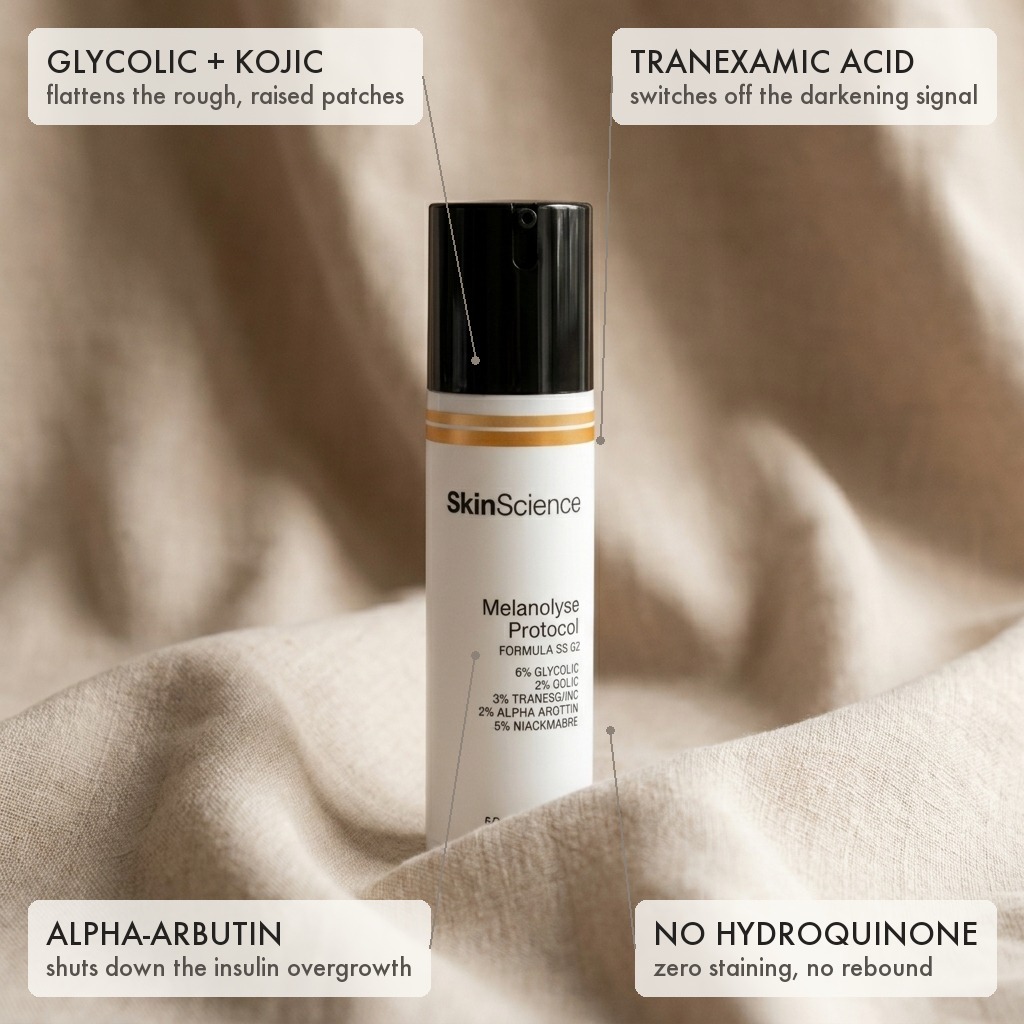
Stopping new pigment isn’t enough — the old marks still need to go. So three faders work the existing stain. 6% glycolic acid lifts the stained surface layer. 2% kojic acid dipalmitate is oil-soluble, so it reaches deeper than water-based brighteners. 2% alpha-arbutin blocks the pigment-making enzyme. Fresh spots fade by day 14; set-in patches keep fading for weeks.
"The patch on my jaw was 4 years old — I’d given up on that one. The new spots faded in two weeks, and by week 10 even the old jaw patch had lifted. Nothing I’ve owned ever touched the set-in ones."
Gentle Enough For Dark-Spot-Prone Skin — No Hydroquinone, No Rebound, No Peeling Cycle
Dark-spot-prone skin punishes harsh treatments: irritation makes your skin produce more dark pigment. Hydroquinone bleaches hard, then rebounds darker when you stop. SkinScience runs the other way — the glycolic sits at 6%, well below peel strength, fragrance-free, with no bleach and no peeling cycle. It’s gentle enough for every day, and daily use is what fades dark spots.
"Hydroquinone gave me two good months, then my cheeks came back darker than before — twice. This never stung, never flaked, and week 8 my patch is the faintest it’s been in years. I’ve used it every single day since."
An Honest 14-Day Timeline + A 30-Day Guarantee + No Hidden Subscriptions
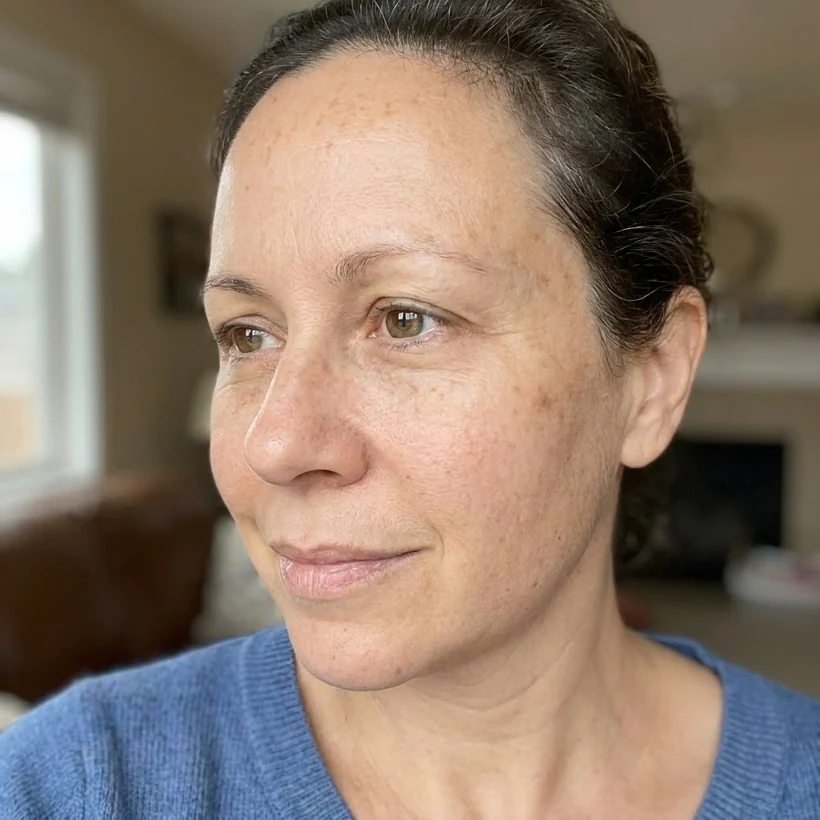
No overnight-miracle talk. Fresh spots show by day 14, about half fade by day 30, and set-in dark spots take 8 to 12 weeks. The risk is on us: a 30-day money-back guarantee refunds every dollar if your patches haven’t started to fade — even a half-empty bottle. It’s a one-time charge, no auto-ship. Our “No Hidden Subscriptions” promise is printed at checkout.
"They told me day 14 for the new spots and two to three months for the deep ones — and that’s almost exactly how it went. No miracle promises. They charged me once, the serum did the rest, and my tone is still even at month 8."

"I’m a researcher who spent years asking why every fade cream fails by month two. The answer was upstream: everyone fades the stain, nobody quiets the signal. Hormones keep telling the pigment cells to make more, so the patch always comes back. I built the protocol I wished someone had handed these women — quiet the signal, block the transfer, lift the stain."— Dana Whitlock · Independent Skin-Science Researcher & Founder, SkinScience
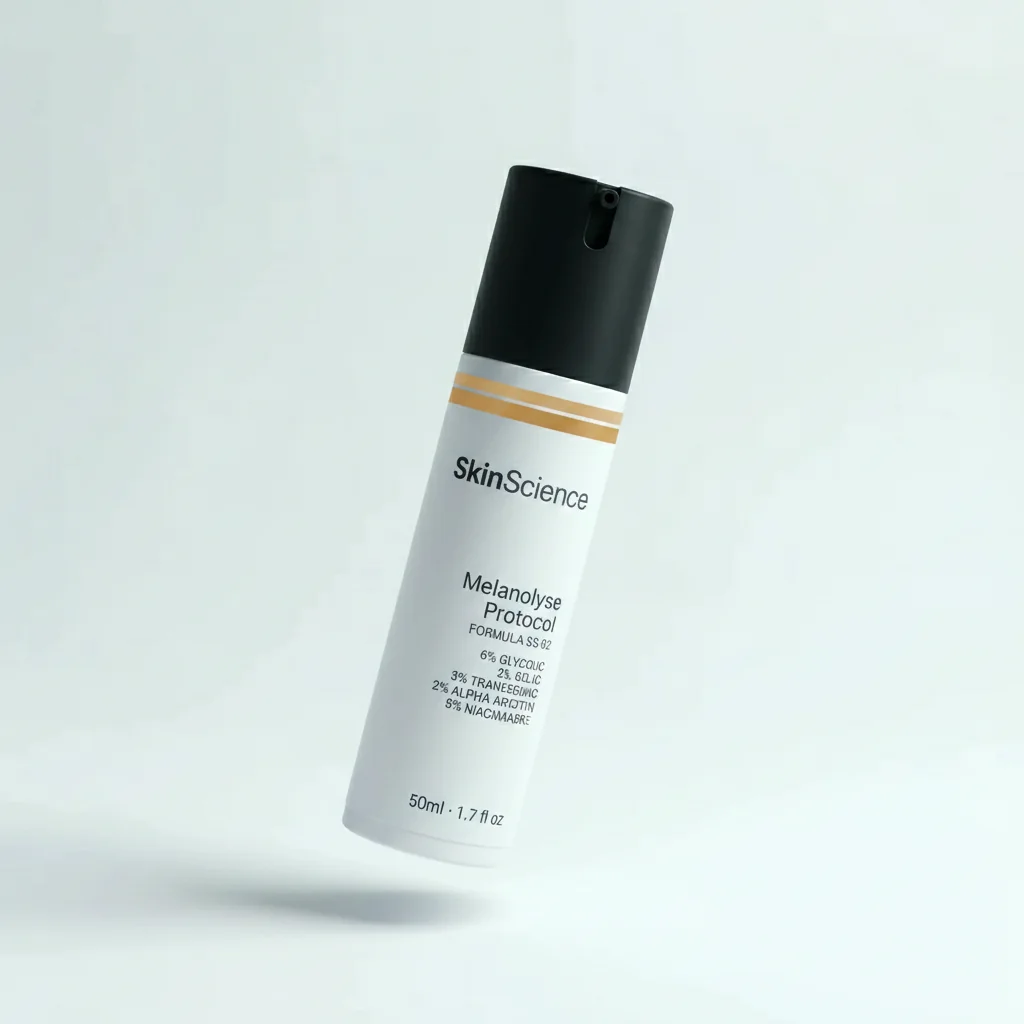
Melanolyse by SkinScience
3% Tranexamic + 5% Niacinamide + 6% Glycolic + 2% Kojic-D + 2% Alpha-Arbutin face serum — fragrance-free, hydroquinone-free · FORMULA SS-02 · For Tone
- Switches off the darkening signal behind dark spots — not just the stain
- 3% tranexamic acid switches off the “make more DARK pigment” broadcast
- 5% niacinamide blocks pigment transfer into surface cells
- 6% glycolic + 2% kojic-D + 2% alpha-arbutin lift the marks already there
- No hydroquinone — no rebound darkening, no peeling cycle
- Fragrance-free · Face-safe · No hidden subscriptions
GUARANTEE
The Signal-Blocker — 3% Tranexamic Acid
The Transfer-Blocker — 5% Niacinamide (Vitamin B3)
The Stain-Lifters — 6% Glycolic + 2% Kojic-D + 2% Alpha-Arbutin
Once a day, on clean dry skin
Smooth 1–2 pumps over the dark patches and the skin around them, once a day. Most women make it the last step before bed. Avoid broken or freshly irritated skin.
Sunscreen every morning — not optional
Daylight restarts the darkening signal. Skip sunscreen and the spots you faded can slowly rebuild. SPF 30+ every morning is what protects your results — treat it as part of the protocol.
What to expect, honestly
Fresh spots fade first — visible around day 14. About half faded by day 30. Deep, set-in dark spots take 8–12 weeks. The effect compounds. Women who stay on it past day 60 report the patches don’t come back. Backed by the 30-day guarantee.
What 5,355 Customers Are Saying
Real buyers, ages 39 to 61 · not edited, not paid

"The melasma showed up after my second pregnancy and my PCOS made sure it never left — nine years of concealer, every single morning. I tried everything, even a hydroquinone script that faded the patches for a month, then they came back darker. Melanolyse was the first thing that went after the signal instead of the stain. At week 2 the NEW spots faded first. By week 8 I did school pickup bare-faced, and I cried in the car after."
- 9 years of melasma — The Ordinary to hydroquinone, nothing held
- Week 2: the new spots faded first — the signal had gone quiet
- Bare-faced at school pickup by week 8

"I knew prescription hydroquinone was ‘stronger’ than this. It also bleached my cheek patch for two good months — then the rebound brought it back darker. Twice. Melanolyse never stung, not once, and there’s no bleach in it at all. Eight weeks in, the cheekbone patch I’ve hidden for years is the faintest it’s been since my thirties. Strength that rebounds on you isn’t strength."
- Hydroquinone faded it — then it rebounded darker, twice
- No sting on skin made reactive by bleach creams
- Cheek patch faintest in years by week 8

"Hormonal spots run in my family, so I knew there was no overnight ‘cure’ — and I appreciated that this company never claimed one. New spots by day 14, the deep ones over two to three months, sunscreen every morning: that’s exactly how it went. I’m eight months in, tone still even. And the part I trust most: they charged me once, exactly what the page said. No surprise subscription, no fight to cancel."
- Honest that deep patches take 8–12 weeks — manage, not miracle
- Husband noticed at week 6 — unprompted
- One-time charge, no hidden subscription
Real Women. Real Even Tone.
Submitted by verified buyers · weeks 2–12










30-Day Money-Back Guarantee + No Hidden Subscriptions
Try Melanolyse for 30 days. If your dark patches haven’t visibly faded — or you just change your mind — email us. We’ll refund every dollar you paid, even on a half-empty bottle. No receipts. No restocking fee. The risk is entirely on us.
- One-time purchase = one-time charge. No sneaky recurring billing, ever.
- No hidden subscriptions. The promise is printed right at checkout.
- No cancel-the-subscription fight. There’s nothing to cancel.
- The ethical opposite of the subscription traps all over this category.
- Fragrance-free · hydroquinone-free · 3% tranexamic + 5% niacinamide · 6% glycolic + kojic-D + arbutin.
5,355+ women · 4.9/5 stars · 30-day guarantee · no hidden subscriptions · fragrance-free & hydroquinone-free
Questions Women Keep Asking
How is this different from hydroquinone?
Hydroquinone is a pigment bleach. It fades the stain that’s already on the surface. But it never switches off the signal telling your skin to make more. So the patches fade for a few weeks, then rebound darker when you stop. At higher doses it also risks permanent blue-black staining. Melanolyse takes the other path. 3% tranexamic acid switches off the signal. 5% niacinamide blocks the transfer. And 6% glycolic + kojic-D + alpha-arbutin lift the marks already there. No bleach. No rebound when you stop.
Is this for melasma or sun spots?
Both — they run on the same pigment pathway, so the same actives fade both. The difference is what keeps them alive. Sun spots mostly stop once you block the sun. Melasma has a hormone signal that keeps refiring from the inside. That’s exactly what the tranexamic acid switches off. Either way, the rule is the same: serum at night, sunscreen every morning.
How fast does it work?
Honestly: fresh spots first, deep patches second. The newest spots fade first — you can see it around day 14. By day 30 they’re about half faded. The deep, set-in dark spots take 8–12 weeks. Pigment that built up over years has to be lifted layer by layer. Anything promising overnight results is just bleaching the surface. It never switches off the signal. The 30-day money-back guarantee covers the first fade — if the fresh spots aren’t lighter by day 30, send it back.
Is it safe during pregnancy or breastfeeding?
There isn’t much pregnancy data on tranexamic acid used on the skin. So to be safe, skip Melanolyse during pregnancy and the first 3 months of breastfeeding. Ask your doctor before restarting. The pigment pathway is very active after birth — the “mom mask.” So month 4 of breastfeeding onward is a good window to clear the leftover melasma. Bring the ingredient list. It’s short and printed on the bottle.
Will the spots come back?
Melasma is hormone-driven and chronic. Distrust anyone selling a permanent cure. What Melanolyse does is manage the signal: quiet the broadcast, block the transfer, lift the stain. The tranexamic effect compounds. Women who stay on it past day 60 report the patches don’t come back. Your half of the deal is sunscreen every morning. Daylight restarts the signal — and skipping SPF is the #1 reason faded spots rebuild.
Is there a hidden subscription?
No — and we make a point of it. A one-time purchase means a one-time charge. There is no auto-ship, no recurring billing, and nothing to cancel. Our “No Hidden Subscriptions” promise is printed right at checkout. And every order is backed by a 30-day money-back guarantee. We built this as the ethical opposite of the subscription traps the category is known for.
SkinScience · Melanolyse Protocol™ (FORMULA SS-02) — the 14-day face-serum protocol for hormonal dark spots and melasma.
These statements have not been evaluated by the Food and Drug Administration. This product is not intended to diagnose, treat, cure, or prevent any disease. Results vary from person to person. For external use only — avoid broken, cracked, or freshly irritated skin. Use sunscreen daily while treating dark spots. Always consult your physician before use if you are pregnant, nursing, or under a doctor’s care for a skin condition.
© SkinScience · Privacy · Terms · Disclosure · Contact